Grok 4.5 Released: SpaceXAI's First Model Trained Specifically for Coding + Agents — Opus-Class, but Faster and Cheaper
Source: https://x.ai/news/grok-4-5 References: Cursor official blog (https://cursor.com/blog/grok-4-5), Artificial Analysis, Snorkel AI, and public discussion on X Information compiled: 2026-07-09
SpaceXAI (formerly xAI) officially released Grok 4.5 on July 8, 2026, positioning it as "the first model trained specifically for coding and agentic tasks," co-trained with Cursor.
In its official messaging, Grok 4.5 is the strongest Grok model to date, excelling at coding, agentic tasks, and knowledge work, while delivering faster speed, lower token consumption, and lower cost than peer models in its tier. The day before release, Elon Musk positioned it as "Opus-class, but faster, more token-efficient, and lower-cost."
1. Model Foundations
| Item | Details |
|---|---|
| Foundation model | V9 foundation model |
| Parameter count | ~1.5T (about 3× Grok 4.3) |
| Training compute | Tens of thousands of NVIDIA GB300 GPUs |
| Context length | 500K at launch (below Grok 4.3's 1M); Elon indicated an upgrade to 1M within roughly a week |
| Training data | Coding, science, engineering, and math; co-trained with Cursor, incorporating trillions of tokens of Cursor usage data |
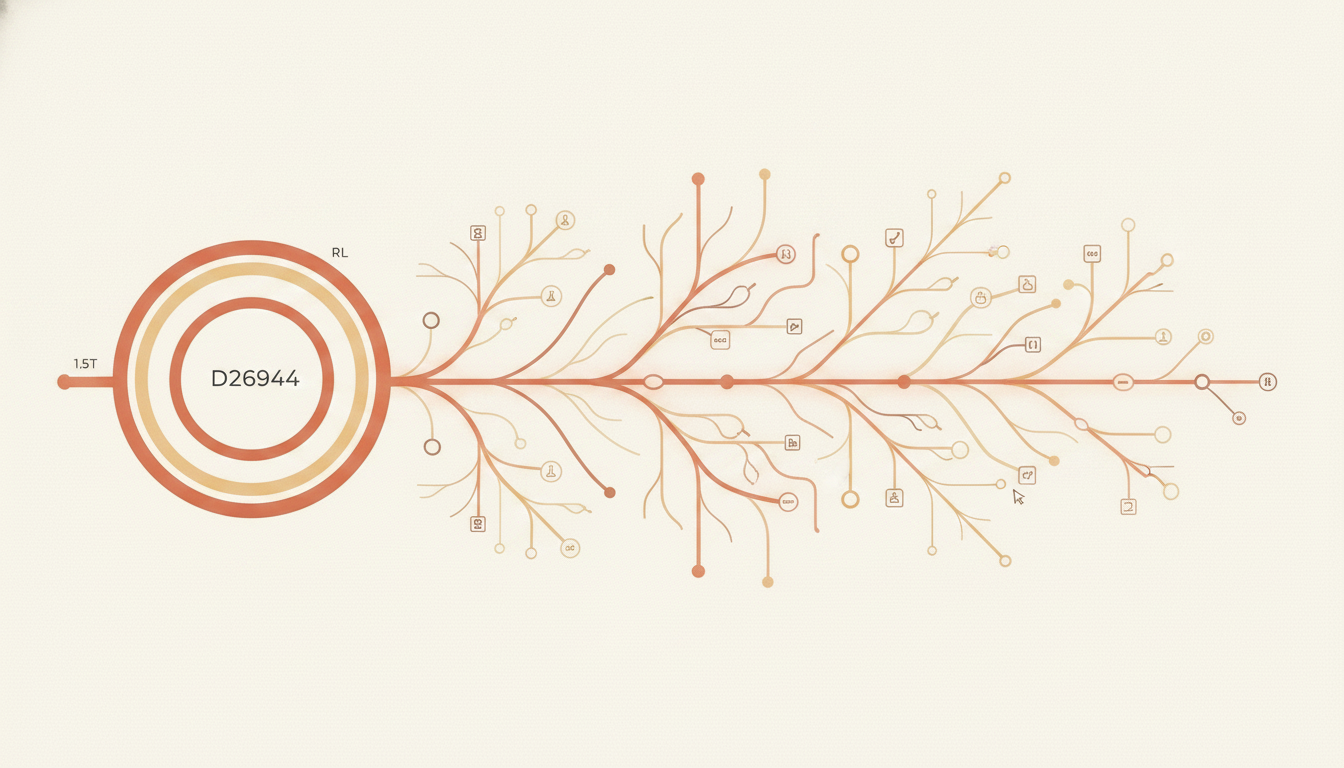
| Training method | Large-scale RL across hundreds of thousands of tasks, focused on multi-step software engineering and technical work, using automated and model-based scoring; supports highly asynchronous training with agent rollouts running for hours |
| Inference speed | ~80 TPS (fast-model speed tier) |
In the official blog, Grok 4.5 is described as "performing well on real engineering tasks and surpassing other leading models in its class," covering large codebases, long tasks spanning multiple repositories, and invocation scenarios involving hundreds of skills and multiple tools.
Cursor's blog added detail on the training setup. Grok 4.5 is a Mixture-of-Experts (MoE) model, with training data broader than the earlier coding-specialized Composer 2.5 — covering STEM tasks, research papers, and other knowledge-work content. The reinforcement-learning environments were built at scale by a distributed agent system; the team noted that some of these environments would have taken hundreds of engineers months to construct manually.
2. Benchmark Performance
The official blog provided comparison charts across five benchmarks: DeepSWE 1.0, DeepSWE 1.1, SWE Marathon, Terminal Bench 2.1, and SWE Bench Pro.
| Benchmark | Grok 4.5 | Fable 5 (max) | GPT-5.5 (xhigh) | Opus 4.8 (max) | Opus 4.7 (max) | GLM-5.2 |
|---|---|---|---|---|---|---|
| DeepSWE 1.0 (pass@1, AA eval) | 62.0% | 66.1% | 64.31% | 55.75% | 40.12% | — |
| DeepSWE 1.1 (mini-swe-agent harness) | 53% | 70% | 67% | 59% | — | 44% |
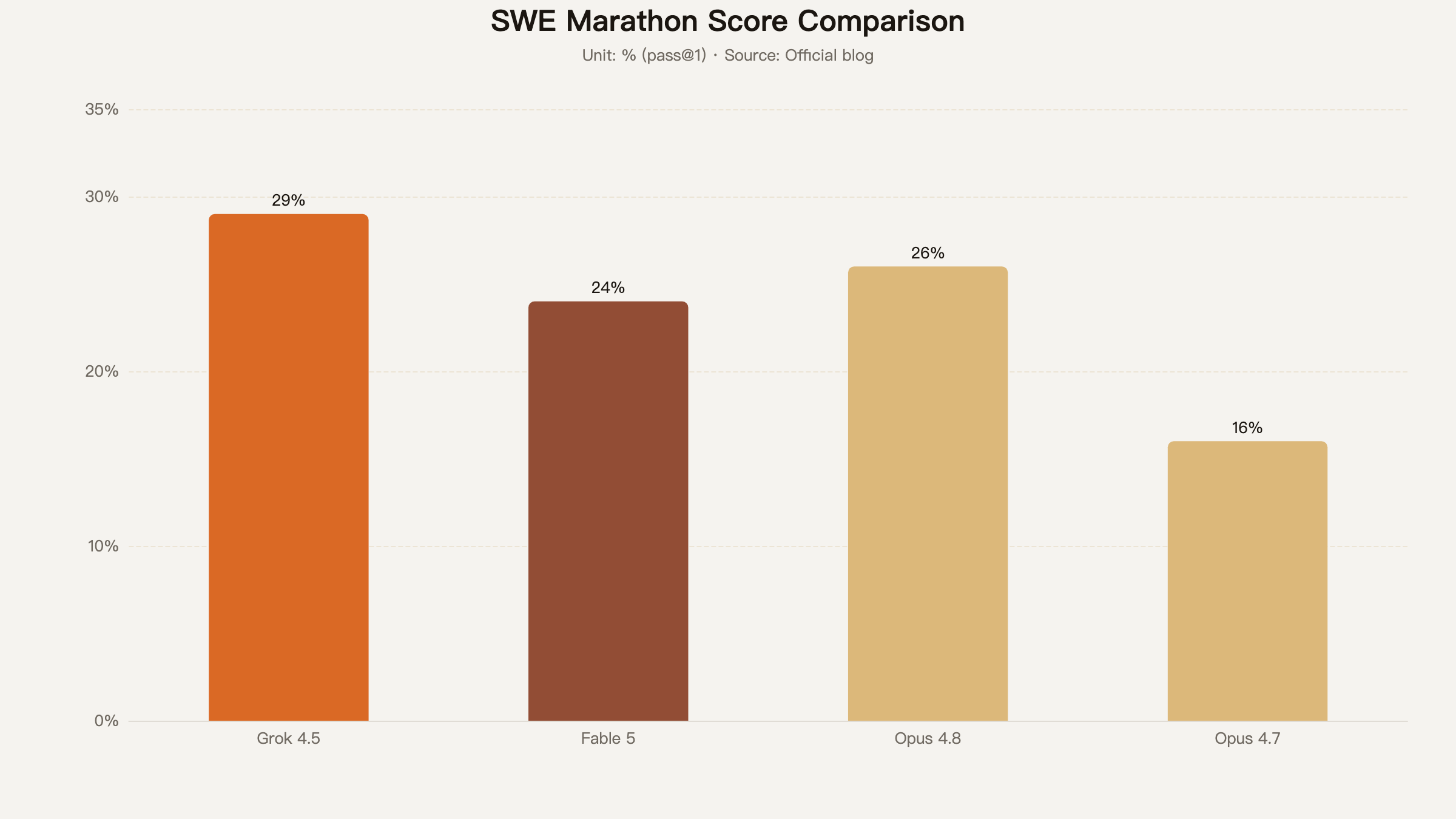
| SWE Marathon (pass@1) | 29.0% | 24.0% | — | 26.0% | 16.0% | — |
| Terminal Bench 2.1 | 83.3% | 84.3% | 83.4% | 78.9% | 78.9% | — |
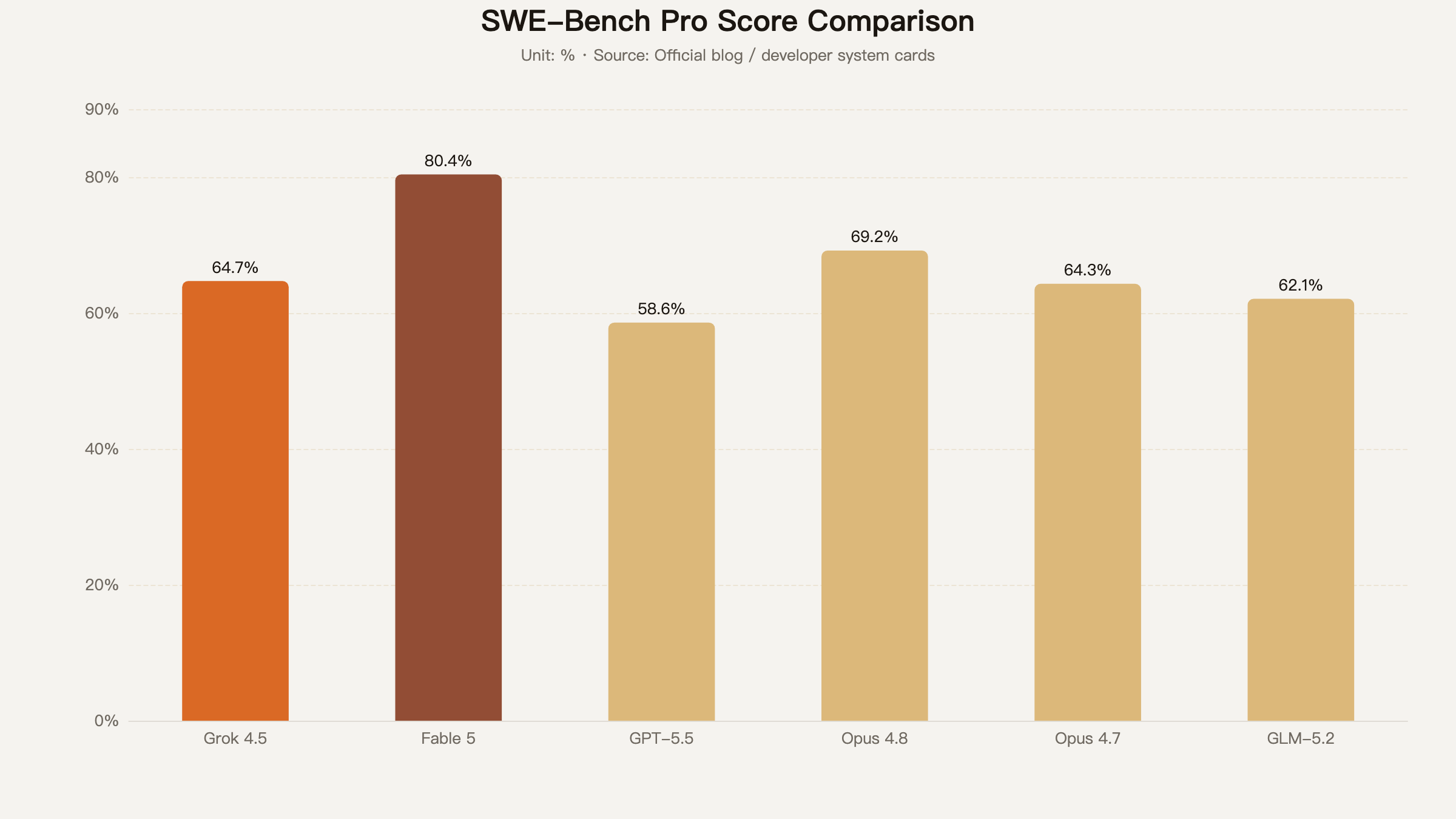
| SWE Bench Pro | 64.7% | 80.4% | 58.6% | 69.2% | 64.3% | 62.1% |
The official note states: "Competitor data comes from each developer's published system cards or benchmark leaderboards."
As the table shows, Grok 4.5 is the only model that beats Opus 4.8 on SWE Marathon (long-horizon software-engineering tasks, including compiler builds and operator optimizations). On Terminal Bench 2.1 and SWE Bench Pro, it sits in the same band as GPT-5.5 and Opus 4.8, behind Fable 5.
Third-Party Review: Artificial Analysis
Artificial Analysis (@ArtificialAnlys) published an independent review on launch day:
- Intelligence Index: 54, ranked #4 (behind Fable 5, GPT-5.5, and Claude Opus 4.8) — up 16 points from Grok 4.3
- Coding Agent Index (based on Grok Build): ~76, roughly on par with GPT-5.5 (Codex), below Fable 5 (Claude Code)
- GDPval-AA v2: Elo 1543, ranked #4 (Opus 4.8 at 1600)
- τ³-Banking: 33%, higher than GPT-5.5 xhigh's 31%
- Cost: Intelligence Index tasks ~$0.31/task; Coding Agent tasks ~$2.49–2.59/task (Fable 5 ~$11.80/task, GPT-5.5 ~$5.07/task)
- Token usage: Coding Agent tasks averaged ~1.9M tokens, lower than Fable 5 (~7.2M) and GPT-5.5 (~6.2M)
- AA-Omniscience (knowledge & hallucination eval): Omniscience Index rose from 18 to 26; accuracy from 35% to 52%; at the same time, hallucination rate rose from 25% to 54%
Third-Party Review: Snorkel AI
Snorkel AI (@SnorkelAI) on GDPval+ (based on real-world professional deliverables, expert-graded):
| Model | GDPval+ |
|---|---|
| Grok 4.5 | 29% |
| GPT-5.5 | 22% |
| Claude Opus 4.8 | 21% |
Elon Musk reposted and commented: "Grok 4.5 true usefulness is excellent."
3. CursorBench Data Contamination & the SWE-Bench Pro Dispute
Cursor's official blog proactively disclosed a data issue:
"Grok 4.5's advantage on CursorBench is due to an earlier snapshot of the Cursor codebase being accidentally included in the training data. The exact impact is unclear. This data will no longer be used for subsequent models; in parallel, we are working on a larger update to CursorBench, so we exclude it here."
The multi-model comparison table from Cursor's blog is below (data from third-party self-reported scores; GPT-5.5's SWE-Bench Multilingual score comes from Cursor's internal run):
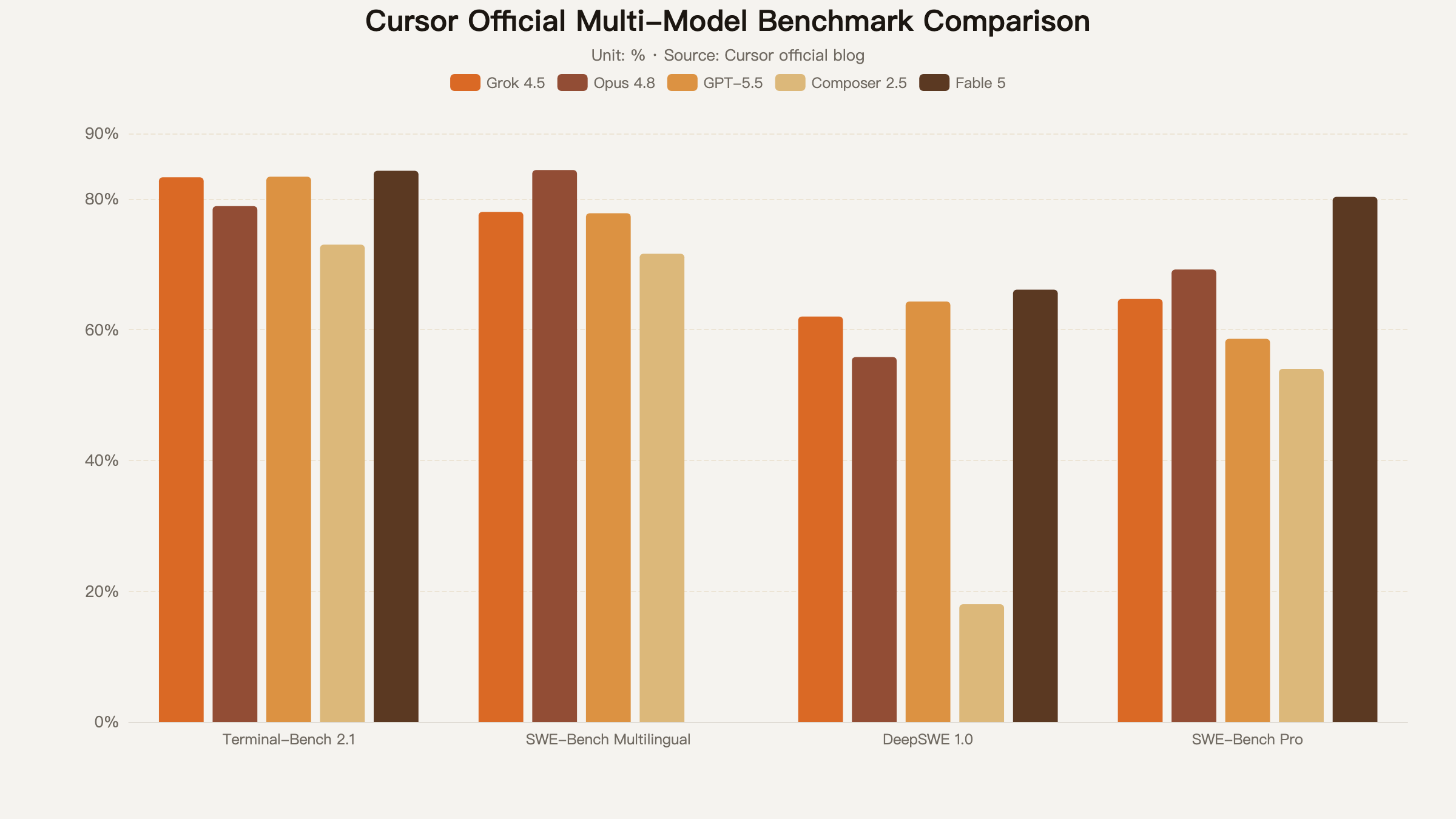
| Benchmark | Grok 4.5 | Opus 4.8 | GPT-5.5 | Composer 2.5 | Fable 5 |
|---|---|---|---|---|---|
| Terminal-Bench 2.1 | 83.3% | 78.9% | 83.4% | 73.0% | 84.3% |
| SWE-Bench Multilingual | 78.0% | 84.4% | 77.8% | 71.6% | — |
| DeepSWE 1.0 (AA) | 62.0% (high) | 55.8% (max) | 64.3% (xhigh) | 18.0% | 66.1% (max) |
| SWE-Bench Pro | 64.7% (high) | 69.2% (max) | 58.6% (xhigh) | 54.0% | 80.3% |
Separately, the SWE-Bench Pro benchmark itself was questioned the same day by OpenAI. After an audit, OpenAI concluded that ~30% of SWE-Bench Pro tasks have issues, that the benchmark is no longer suitable as a reliable measure of frontier coding capability, and retracted its earlier recommendation. This statement came around the same time as Grok 4.5's 64.7% score on the benchmark, drawing discussion in the X community.
4. Speed and Cost Efficiency
The official blog emphasized that Grok 4.5 serves at a "flash-model-tier" 80 TPS, while delivering roughly 2× the token efficiency of peer leading models on the same tasks.
Average output-token usage on SWE Bench Pro tasks:
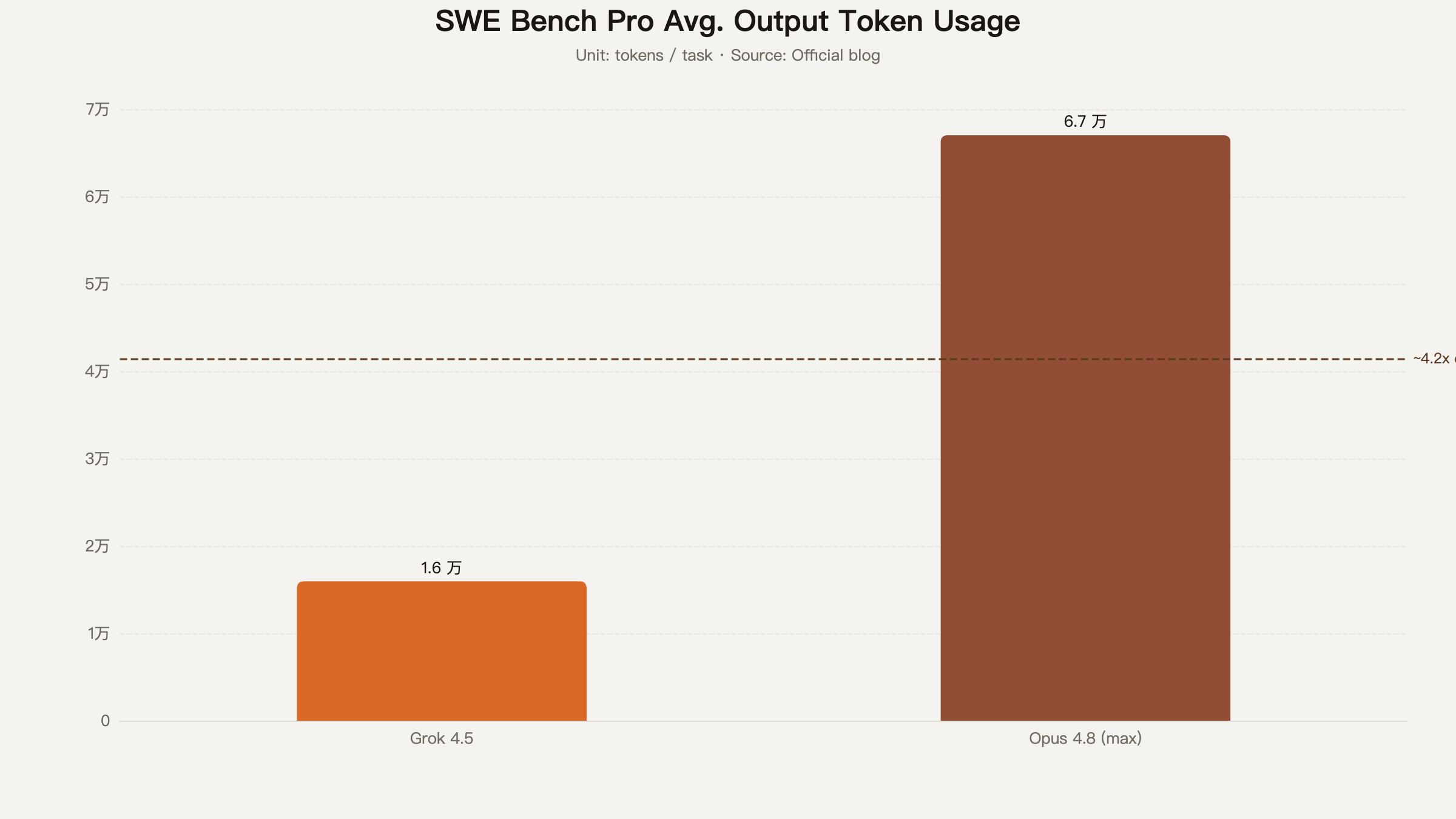
- Grok 4.5: avg 15,954 output tokens/task
- Opus 4.8 (max): avg 67,020 output tokens/task
- A gap of roughly 4.2×
Official summary: "Grok 4.5 delivers the highest intelligence per unit of time and per unit of cost."
5. Office Scenarios and Product Capabilities
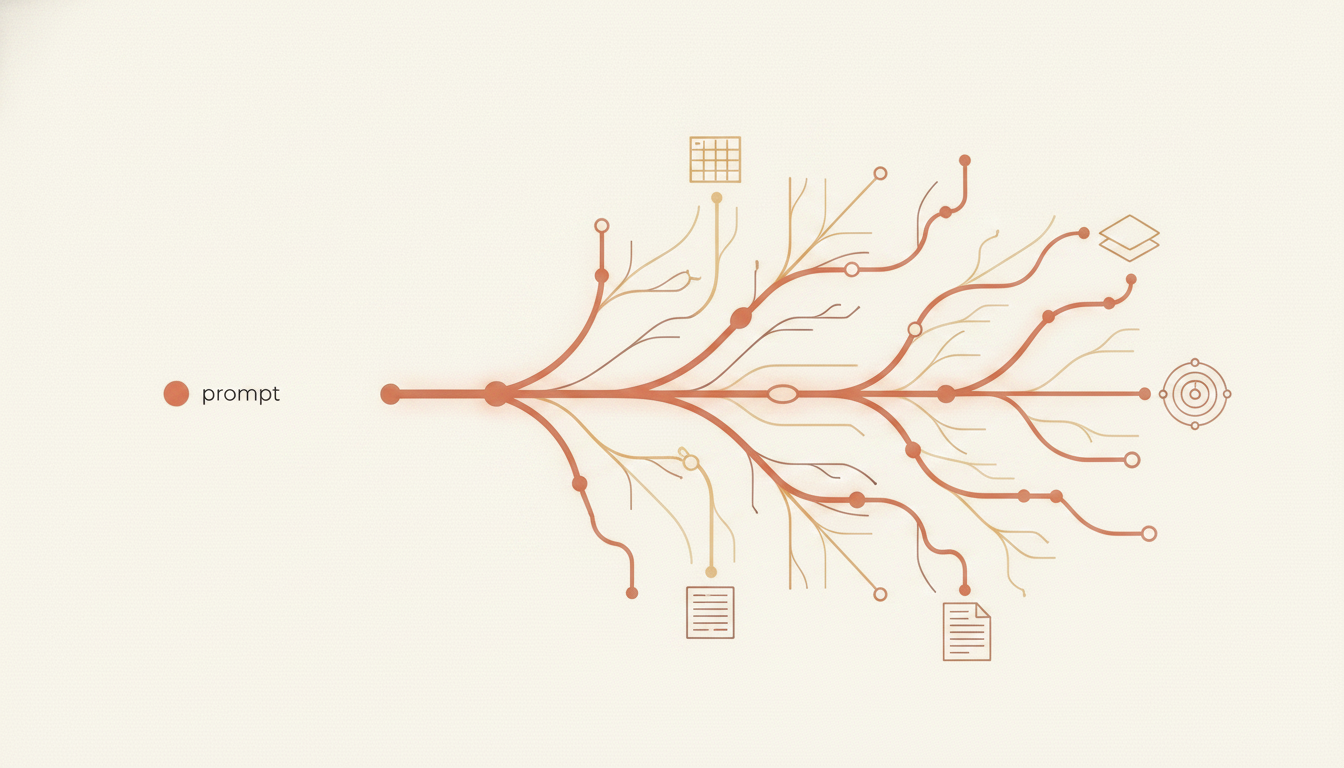
Grok 4.5 is now the default model in Grok Build. Beyond coding, the official post showcased its performance in office scenarios:
- Excel: can build complex models involving web research and multi-worksheet formulas, and leaves notes in the file for later reference
- PowerPoint: can draw complex charts using native PowerPoint shapes and design slide content
- Word: writes clear text content
The team also demonstrated "generate a full app from a single prompt" — for example, having the model build a Three.js solar-system simulator with realistic orbital motion and adjustable time speed. They stated that even under minimal prompts, Grok 4.5 produces well-designed, end-to-end runnable apps.
6. Pricing and Access
API Pricing
| Provider | Input (per million tokens) | Output (per million tokens) | Notes |
|---|---|---|---|
| SpaceXAI official API | $2 | $6 | cache-hit input ~$0.5 (~75% off); cost doubles for input above 200K |
| Cursor (base model) | $2 | $6 | same as official |
| Cursor (fast variant) | $4 | $18 | new tier added by Cursor |
Access Channels
- SpaceXAI Console / API: primary access channel
- Grok Build: Grok 4.5 is already the default model; official usage quota was reset
- Cursor: supported on desktop, web, iOS, CLI, and SDK; individual and team subscriptions include substantial usage of this model, with 2× usage in the first week
- OpenCode Zen: available directly via SuperGrok / X Premium subscriptions
- Warp: supports access via X Premium subscriptions
- Hermes Agent (Nous): callable via Nous Portal subscriptions, Grok/X subscriptions, API, and OpenRouter
Regional Availability
The blog explicitly notes: "Grok 4.5 is currently not supported in the EU across any SpaceXAI product or API console, with availability expected in mid-July."
Model Positioning Note
Cursor's blog specifically noted: Grok 4.5 and Composer 2.5 are two different tiers of model weights — Composer 2.5 will continue to be offered, and new models at the same scale will be released in the future.
7. Community Feedback Highlights
Discussion of Grok 4.5 on X centered on price-to-performance, speed, and coding capability, alongside negative feedback on front-end design, accuracy, and safety guardrails.
Positive:
- @farzyness: Capability gains usually come with speed drops, but Grok 4.5's "fast enough + good enough" delivered an experience improvement exceeding pure peak-capability gains. Elon Musk reposted and added that the model is not yet using the internal C/C++ inference stack, suggesting speed could still roughly double.
- @GavinSBaker: By the numbers, Grok 4.5 is "Pareto-dominant" on coding tasks.
- @morganlinton: Called this a turning point for price-to-performance — "the best price-to-performance is back with US models."
- @RampLabs: Observed Grok 4.5 exhibiting "frontier-grade shell-usage discipline," chaining Bash commands and filtering output more consistently than other models tested.
Neutral / Scenario-Specific:
- Elon Musk himself: "To be fair, Fable is indeed stronger than Grok 4.5, but most tasks don't require Fable-level capability."
- @ticalcode shared real-world production data: ~$97 spent in 24 hours, ~102M tokens, ~2,970 requests. They argued the model fits "emergency-room" scenarios like complex incident triage and cross-file reasoning, but not 24/7 high-frequency daily calls — "a scalpel, not a faucet."
Negative:
- @bridgemindai (BridgeBench lava-lamp test): Grok 4.5 is a clear step up over Grok 4.3, but its UI design still trails Claude Opus 4.7.
- @Jebediah80: In a quoting-agent scenario test, Claude Opus 4.8 hit 100% accuracy at 3.7s response, while Grok 4.5 reached 90% accuracy and was ~2.4× slower (due to more reasoning tokens).
- @elder_plinius: Posted claiming to have bypassed Grok 4.5's guardrails via red-teaming.
- Artificial Analysis's review showed the hallucination rate rising from 25% to 54%.
- Multiple EU users reported being unable to access the model.
8. Roadmap
Follow-up plans surfaced in the official blog and Elon Musk's posts on X include:
- Context window to expand from 500K to 1M, expected within about a week.
- Current inference is not yet using the internal C/C++ inference software stack — Elon indicated speed "could potentially more than double again."
- Grok Build harness usability has "perceptible improvements every week."
- Rumors circulating in the Chinese-speaking community put the next-gen Grok 5 parameter count above 6 trillion; this figure is not officially confirmed.
References
- Official blog: https://x.ai/news/grok-4-5
- Cursor official blog: https://cursor.com/blog/grok-4-5
- SpaceXAI announcement post: https://x.com/SpaceXAI/status/2074915721684086811
- Cursor announcement post: https://x.com/cursor_ai/status/2074915744999969059
- Artificial Analysis review post: https://x.com/ArtificialAnlys/status/2074956932289282087
- Snorkel AI GDPval+ review post: https://x.com/SnorkelAI/status/2074919948254613821